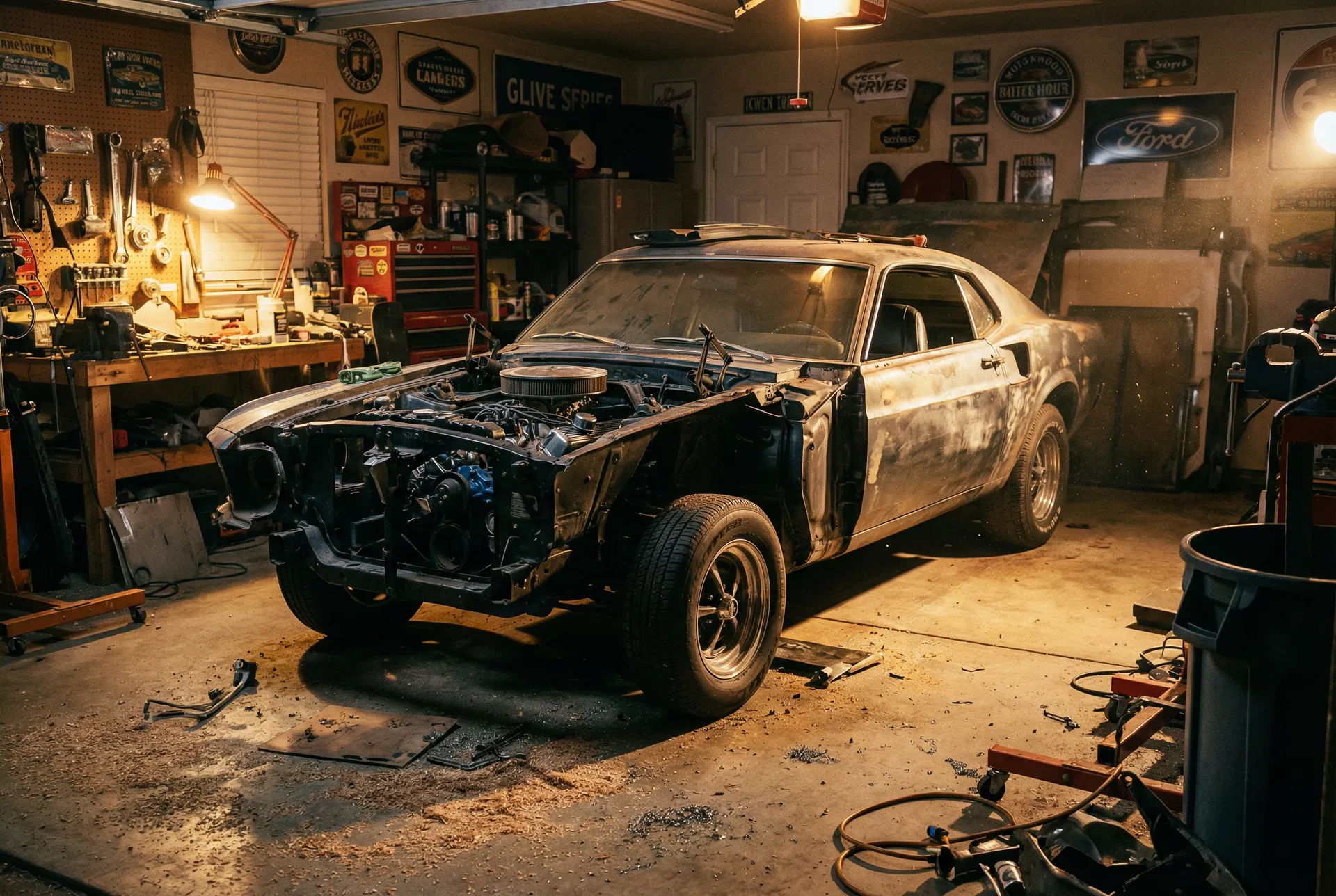
How to Weld for Beginners: MIG vs TIG vs Stick for Automotive Fabrication in 2024
How to Weld for Beginners: MIG vs TIG vs Stick for Automotive Fabrication in 2024
Welding for beginners is the foundational skill for any serious automotive fabrication project, allowing you to join metal parts permanently and create custom components for your project car. Understanding the differences between MIG, TIG, and Stick welding processes is crucial for DIY mechanics to choose the right method for specific tasks, ensuring strong, reliable, and aesthetically pleasing results that stand the test of time on the road or track. This knowledge empowers home builders to tackle everything from chassis reinforcement to exhaust repair with confidence and precision.
Table of Contents
- Understanding the Core Welding Processes
- MIG Welding: The DIY Mechanic's Workhorse
- TIG Welding: Precision for Automotive Artistry
- Stick Welding: The Rugged All-Rounder
- Choosing Your First Welder: Practical Considerations
- Essential Safety and Setup for Beginners
- Practice Makes Perfect: Your First Automotive Welds
Understanding the Core Welding Processes
Welding is the art and science of permanently joining two or more metal parts by melting them together, often with the addition of a filler material. For DIY mechanics and project car builders, mastering welding opens up a world of possibilities, from repairing rusted panels and fabricating custom brackets to building entire chassis components. But before you strike your first arc, it's essential to understand the three primary welding processes commonly used in automotive fabrication: MIG, TIG, and Stick. Each has its strengths, weaknesses, and ideal applications, making the choice dependent on the material, desired finish, and your skill level.
The Science Behind the Spark: How Welding Works
At its core, welding involves creating an electrical arc between an electrode (or wire) and the base metal. This arc generates intense heat, melting the metals at the joint. A filler material is typically added to strengthen the joint and fill any gaps. To prevent atmospheric contamination (which can weaken the weld), a shielding gas or flux coating is used to protect the molten metal from oxygen and nitrogen. The type of electrode, filler material, and shielding method are what primarily differentiate MIG, TIG, and Stick welding. Understanding this fundamental principle will help you grasp why each process behaves differently and is suited for specific tasks in your garage.
Key Factors for Automotive Fabrication
When considering welding for automotive projects, several factors come into play. Material type is paramount; mild steel, stainless steel, and aluminum each require specific welding processes and techniques. Material thickness also dictates the power and heat input needed. The desired aesthetic finish is another crucial factor – some welds are meant to be hidden, while others are part of the vehicle's visual appeal. Finally, the budget for equipment, consumables, and training will heavily influence your initial choice. For home builders, versatility and ease of learning are often high priorities, especially when starting out.
Common Automotive Welding Applications
From restoring classic cars to building custom hot rods, welding is indispensable. Common applications include repairing rusted floor pans, patching body panels, fabricating custom exhaust systems, reinforcing chassis components, mounting suspension points, and even building roll cages. Each of these tasks might benefit from a different welding process. For instance, thin body panels often demand the precision of MIG or TIG, while heavy frame work might be better suited for Stick or high-amperage MIG. Knowing the typical demands of your project will guide your decision on which welding process to learn first.
MIG Welding: The DIY Mechanic's Workhorse
MIG (Metal Inert Gas) welding, also known as Gas Metal Arc Welding (GMAW), is arguably the most popular choice for beginners and experienced DIY mechanics alike. Its relative ease of learning, speed, and versatility make it an excellent starting point for automotive fabrication. MIG uses a continuously fed wire electrode that melts and becomes the filler material, protected by an inert shielding gas (usually a mix of Argon and CO2) that flows from the torch. This "point and shoot" nature significantly reduces the learning curve compared to other methods.
How MIG Welding Works: The Basics
In MIG welding, a spool of wire (the electrode) is fed through the welding gun at a controlled speed. When you pull the trigger, an electrical arc is struck between the wire and the workpiece, melting both the wire and the base metal. Simultaneously, shielding gas flows out of the nozzle, creating a protective envelope around the molten weld pool. This continuous feed and gas shield allow for long, consistent welds without stopping to change electrodes, making it very efficient. The power source is typically a constant voltage (CV) machine, which helps maintain a stable arc even with minor changes in arc length.
🔧 Recommended Tool: Lincoln Electric MIG Welder
This versatile MIG welder is a fantastic choice for beginners and experienced DIY mechanics, offering reliable performance for a wide range of automotive fabrication tasks, from bodywork to chassis repairs.
[Amazon link: https://www.amazon.com/dp/B07GXLM5MQ?tag=seperts-20]
Advantages and Disadvantages for Automotive Use
Advantages:
- Ease of Learning: MIG is often called the "hot glue gun" of welding due to its straightforward operation.
- Speed: Continuous wire feed allows for fast deposition rates and long weld beads.
- Versatility: Excellent for mild steel, stainless steel, and aluminum (with the right setup and gas).
- Clean Welds: Produces relatively clean welds with minimal spatter, especially with proper settings.
- Good for Thin Materials: Can weld thin sheet metal (like body panels) with appropriate settings and wire.
Disadvantages:
- Equipment Cost: A full MIG setup (welder, gas tank, regulator) can be more expensive upfront than a basic Stick welder.
- Portability: Requires a gas cylinder, making it less portable than Stick welding for outdoor or remote jobs.
- Wind Sensitivity: Shielding gas can be blown away by wind, making outdoor welding challenging without protection.
- Limited Penetration: Generally offers less penetration than Stick or TIG for very thick materials.
Setting Up Your MIG Welder for Car Projects
Setting up a MIG welder involves a few key steps. First, ensure your power source is appropriate for your machine (120V for smaller units, 240V for larger ones). Install the wire spool, threading it through the drive rollers and into the gun liner. Connect your shielding gas cylinder (typically 75% Argon/25% CO2 for mild steel) to the regulator, and then to the welder. Set your gas flow rate (usually 15-25 cubic feet per hour, or CFH). Finally, adjust your wire feed speed (WFS) and voltage (V) based on the material thickness and type. Most modern MIG welders have charts inside the door or digital displays to guide these settings. Always remember to attach your ground clamp securely to the workpiece, not just the table.
TIG Welding: Precision for Automotive Artistry
TIG (Tungsten Inert Gas) welding, also known as Gas Tungsten Arc Welding (GTAW), is the go-to process for high-quality, precise, and aesthetically pleasing welds. It's often considered the most challenging to learn but rewards the dedicated DIY mechanic with unparalleled control and beautiful results. TIG uses a non-consumable tungsten electrode to create the arc, and a separate filler rod is manually fed into the weld pool. An inert shielding gas (usually 100% Argon) protects the tungsten and the molten metal.
The Intricacies of TIG Welding
TIG welding requires significant hand-eye coordination, as you're essentially doing three things at once: holding the torch, feeding the filler rod, and often controlling a foot pedal for amperage. The tungsten electrode, which doesn't melt, creates a very focused arc that generates intense heat. The operator dabs the filler rod into the molten puddle, building up the weld bead. The inert gas shield ensures a very clean weld with no spatter and minimal post-weld cleanup. This process allows for extremely precise heat control, making it ideal for thin materials and critical applications where weld integrity and appearance are paramount.
Advantages and Disadvantages for Automotive Use
Advantages:
- Superior Quality and Appearance: Produces the cleanest, strongest, and most aesthetically pleasing welds.
- Precision Control: Excellent heat control allows for welding very thin materials without burn-through.
- Versatility: Can weld almost any metal, including mild steel, stainless steel, aluminum, magnesium, and exotic alloys.
- No Spatter: Creates virtually no spatter, reducing cleanup time.
- No Flux or Slag: No need to chip off slag, making post-weld finishing easier.
Disadvantages:
- High Skill Level Required: Demands significant practice and coordination to master.
- Slower Process: Slower than MIG or Stick due to manual filler rod feeding and precise technique.
- Higher Equipment Cost: TIG welders, especially AC/DC units capable of aluminum, are generally the most expensive.
- Less Portable: Requires a gas cylinder and is not ideal for outdoor or windy conditions.
- Fragile Tungsten: The tungsten electrode can be contaminated if it touches the weld pool or filler rod.
When to Choose TIG for Your Project Car
TIG welding shines in specific automotive applications where quality, aesthetics, and material type are critical.
- Aluminum Fabrication: TIG is the preferred method for welding aluminum components like intake manifolds, intercooler piping, fuel cells, and custom radiator mounts. An AC (Alternating Current) TIG machine is essential for aluminum.
- Stainless Steel Exhausts and Manifolds: For custom stainless steel exhaust systems, turbo manifolds, or roll cages, TIG produces beautiful, strong, and corrosion-resistant welds.
- Thin Sheet Metal: When working with very thin body panels or intricate bracketry where burn-through is a concern, TIG offers unmatched control.
- Critical Structural Components: For roll cages, suspension pick-up points, or chassis reinforcement where weld integrity is paramount, TIG provides superior strength and penetration control.
- Show Car Quality: If you're building a show car and the welds will be visible, TIG is the only way to achieve that "stack of dimes" perfect look.
Stick Welding: The Rugged All-Rounder
Stick welding, also known as Shielded Metal Arc Welding (SMAW), is the oldest and simplest form of arc welding. It uses a consumable electrode (the "stick") coated in flux. When the arc is struck, the flux melts and creates a protective gas shield and a layer of slag over the weld pool, protecting it from atmospheric contamination. Stick welding is known for its ruggedness, versatility in various environments, and ability to handle dirty or rusty materials better than MIG or TIG.
The Simplicity of Stick Welding
Stick welding involves clamping an electrode (the "stick") into an electrode holder, which is connected to the welder. The welder provides the current, and when the tip of the electrode touches the workpiece and is then slightly pulled away, an arc is struck. The heat from the arc melts the electrode and the base metal, forming a weld puddle. The flux coating on the electrode vaporizes to create a shielding gas, and also forms a layer of slag that protects the cooling weld from the atmosphere. Once the weld cools, the slag is chipped away. This process is very forgiving of less-than-perfect material preparation and can be done outdoors without much concern for wind.
Advantages and Disadvantages for Automotive Use
Advantages:
- Low Equipment Cost: Stick welders are generally the least expensive to purchase, making them a great entry point.
- Portability: No gas cylinder needed, making them highly portable for remote or outdoor jobs.
- Versatile: Can weld a wide range of metals and thicknesses, especially thicker materials.
- Tolerant of Dirty Surfaces: More forgiving of rust, paint, and grime than MIG or TIG.
- Good for Outdoor Use: Not affected by wind, as the flux coating provides its own shielding.
Disadvantages:
- Slower Process: Requires stopping to change electrodes frequently and chipping off slag.
- Higher Skill for Thin Materials: Difficult to weld thin sheet metal (under 1/8 inch) without burn-through.
- More Cleanup: Produces significant slag that must be chipped off, and more spatter.
- Less Aesthetic: Welds are generally not as clean or visually appealing as MIG or TIG.
- Fumes: Produces more fumes than MIG or TIG, requiring good ventilation.
Ideal Automotive Applications for Stick Welding
While not typically the first choice for delicate bodywork, Stick welding has its place in the automotive garage, especially for heavy-duty fabrication.
- Frame Repair and Reinforcement: For welding thick frame rails, crossmembers, or heavy-duty brackets, Stick welding provides deep penetration and strong welds.
- Trailer Fabrication: If you're building a car trailer or modifying an existing one, Stick is excellent for structural steel work.
- Off-Road Vehicle Fabrication: For rock sliders, bumpers, or heavy-duty suspension components on off-road vehicles, Stick welding is robust and reliable.
- Repairing Cast Iron: Certain electrodes (like nickel-based rods) can be used for repairing cracked cast iron engine blocks or exhaust manifolds, though this is an advanced technique.
- Outdoor Repairs: For quick, robust repairs on farm equipment or vehicles that can't be brought into the garage, Stick's portability and wind resistance are invaluable.
Choosing Your First Welder: Practical Considerations
Deciding on your first welder is a significant step for any DIY mechanic. It's an investment that will shape your capabilities and the types of projects you can tackle. There's no single "best" welder; the ideal choice depends on your specific needs, budget, and the materials you plan to work with most often. Consider the balance between initial cost, ease of use, versatility, and the quality of welds you need to produce.
Step 1 of 3: Assess Your Project Needs
Before you even look at welders, take stock of your typical project car goals.
- Bodywork & Thin Sheet Metal: If you're primarily doing rust repair, patching panels, or fabricating custom brackets from thin gauge steel (16-22 gauge), a MIG welder is likely your best bet. It offers the control and speed needed for these delicate tasks.
- Heavy Fabrication & Structural Work: For welding chassis components, roll cages, heavy frames, or building trailers (1/8 inch thick steel and up), a more powerful MIG or even a Stick welder might be suitable. Stick welding offers deep penetration for thick materials.
- Aluminum & Stainless Steel: If you plan to work with aluminum (e.g., custom intake piping, intercoolers) or stainless steel (e.g., exhaust manifolds, custom tanks), then an AC/DC TIG welder is essential. While more expensive and harder to learn, it's the only way to get high-quality aluminum welds.
- Versatility: If you want to tackle a bit of everything, some multi-process welders offer MIG, TIG, and Stick capabilities in one machine. These can be a good compromise, though they often don't excel at any one process as much as dedicated machines.
Step 2 of 3: Budget and Power Requirements
Your budget will play a significant role in your choice.
- Entry-Level Stick Welders: Can be found for a few hundred dollars, but often limited in features and power.
- Entry-Level MIG Welders: Typically start around $400-$800 for a decent 120V unit capable of light to medium fabrication. Add another $100-$200 for a gas cylinder and regulator.
- Entry-Level TIG Welders: DC-only TIG welders (for steel/stainless) start around $600-$1000. AC/DC TIG welders (for aluminum) usually start at $1000 and go upwards of $2000+.
- Multi-Process Welders: Can range from $800 to several thousand, depending on features and power.
Also, consider your garage's electrical supply. Most smaller MIG and Stick welders run on standard 120V household current. However, for more power and to weld thicker materials, you'll need a 240V outlet, which many garages don't have readily available. Plan for any necessary electrical upgrades.
Step 3 of 3: Learning Curve and Consumables
- Learning Curve: MIG is generally the easiest to learn, followed by Stick, and then TIG (which is the most challenging). If you're completely new to welding, starting with MIG can build confidence quickly.
- Consumables:
- MIG: Requires wire spools (various types and sizes), shielding gas (cylinder and regulator), and contact tips/nozzles.
- TIG: Requires tungsten electrodes (various types and sizes), filler rods (various metals), shielding gas (cylinder and regulator), collets/collet bodies, and ceramic cups.
- Stick: Requires various types and sizes of welding electrodes (the "sticks").
Consider the ongoing cost and availability of these consumables. For example, a gas cylinder for MIG or TIG needs to be refilled periodically, which is an additional expense.
Case Study: The Weekend Warrior — Before/After
Before: Mark, a DIY mechanic, wanted to replace rusted rocker panels on his classic Mustang. He tried using a cheap flux-core MIG welder, but the welds were inconsistent, full of spatter, and often burned through the thin sheet metal, leading to frustration and more holes than he started with. He was also struggling with fabricating custom exhaust hangers due to poor penetration.
After: Mark invested in a quality 240V MIG welder with gas shielding. After watching a few AutoAnvil tutorials and practicing on scrap metal, he was able to dial in his settings. The difference was night and day. He successfully replaced the rocker panels with clean, strong welds and fabricated custom exhaust hangers that looked professional. His confidence soared, and he moved on to reinforcing his chassis, knowing his welds would hold. The key was having the right tool and understanding how to use it.
Essential Safety and Setup for Beginners
Welding is a powerful and rewarding skill, but it comes with inherent risks. Prioritizing safety is non-negotiable for every DIY mechanic, especially beginners. The intense heat, bright light, electrical currents, and fumes generated during welding can cause serious injury if proper precautions aren't taken. Before you even strike your first arc, ensure your workspace is safe and you have all the necessary personal protective equipment (PPE).
Personal Protective Equipment (PPE) Checklist
✅ Welding Helmet: Absolutely essential. Must have an auto-darkening lens with a shade rating appropriate for your welding process (typically shade 9-13). Ensure it's comfortable and fits well.
✅ Welding Gloves: Heavy-duty, heat-resistant leather gloves are required to protect your hands from heat, sparks, and UV radiation.
✅ Flame-Resistant Clothing: Long-sleeved shirts and pants made of cotton, denim, or leather are crucial. Synthetics will melt to your skin. Avoid frayed clothing.
✅ Closed-Toe Leather Boots: Protect your feet from falling hot metal and sparks.
✅ Safety Glasses: Wear these under your welding helmet to protect your eyes from grinding sparks or slag chipping, even when not actively welding.
✅ Respirator/Ventilation: Welding fumes can be toxic. A good ventilation system (fume extractor, open doors/windows, fans) is critical. For certain materials or processes, a respirator with appropriate filters is highly recommended.
✅ Hearing Protection: Grinding and chipping slag can be loud. Earplugs or earmuffs are a good idea.
Preparing Your Workspace for Welding
Your welding area needs to be safe and organized.
- Clear Flammables: Remove all flammable materials (rags, solvents, paper, wood, plastics) from the welding area. Sparks and spatter can travel surprisingly far.
- Fire Extinguisher: Have a fully charged ABC-rated fire extinguisher readily accessible.
- Ventilation: Ensure adequate ventilation to disperse welding fumes. This could be an exhaust fan, open garage doors, or a dedicated fume extractor.
- Cleanliness: Keep your work area tidy. Clutter is a tripping hazard and can hide flammable materials.
- Grounding: Ensure your workpiece is properly grounded to prevent electrical shock and ensure a stable arc. Never weld on a vehicle without disconnecting the battery.
- Dedicated Welding Table: A sturdy, metal welding table is ideal. If using a non-metal surface, protect it with fire-resistant blankets.
Initial Setup and Machine Checks
Before powering on your welder, perform these checks:
- Power Connection: Ensure the welder is plugged into the correct voltage outlet and that the plug and cord are in good condition.
- Ground Clamp: Attach the ground clamp securely to the workpiece, ensuring good metal-to-metal contact.
- Gas Connection (MIG/TIG): Verify the gas cylinder is secure, the regulator is properly installed, and the gas hose is connected without leaks. Set the appropriate gas flow rate.
- Electrode/Wire: For Stick, ensure the electrode is properly clamped. For MIG, check the wire feed tension and ensure the contact tip is clean. For TIG, ensure the tungsten is sharpened and installed correctly.
- Settings: Double-check your amperage/voltage and wire feed speed settings are appropriate for the material thickness you're about to weld.
- Test Run: Before welding on your actual project, do a quick test weld on a piece of scrap metal to confirm settings and ensure everything is functioning correctly.
🔧 Recommended Tool: Astro Pneumatic 78827 Creeper
While not a welding tool, a comfortable creeper like this is invaluable when working under vehicles, making access to chassis components for welding and fabrication much easier and safer.
[Amazon link: https://www.amazon.com/dp/B001DXHJ7G?tag=seperts-20]
Practice Makes Perfect: Your First Automotive Welds
Learning to weld is a hands-on skill that requires patience, repetition, and a willingness to learn from mistakes. For DIY mechanics, the goal isn't just to make metal stick together, but to create strong, reliable, and sometimes aesthetically pleasing joints that will hold up under the stresses of automotive use. Start with scrap metal, understand your machine, and gradually work your way up to more complex projects.
Understanding the Weld Puddle and Bead Formation
The "weld puddle" is the molten pool of metal created by the arc. Learning to control this puddle is the key to successful welding.
- MIG: Look for a consistent, wet, and slightly convex puddle. The wire should melt smoothly into the puddle. Listen for a steady, sizzling bacon sound. Too fast wire feed or too low voltage will create a tall, cold bead. Too slow wire feed or too high voltage will cause burn-through or a flat, wide bead.
- TIG: The TIG puddle is very bright and fluid. You'll see the base metal melt and then manually dab the filler rod into this puddle. The goal is a consistent, evenly spaced series of overlapping puddles, often described as a "stack of dimes."
- Stick: The stick puddle is often obscured by slag, but you'll see a molten pool behind the arc. The key is maintaining a consistent arc length and travel speed to create a uniform bead with good penetration.
Common Beginner Mistakes and How to Fix Them
- Incorrect Settings: Too much or too little heat/wire feed.
- Fix: Consult your welder's chart, practice on scrap, and adjust until you get a consistent, smooth arc and puddle.
- Poor Arc Length: Holding the electrode too far or too close.
- Fix: Maintain a consistent arc length (typically 1/8" to 1/4" for MIG/Stick, slightly closer for TIG). Practice makes perfect.
- Inconsistent Travel Speed: Moving too fast or too slow.
- Fix: Aim for a steady, deliberate pace. Too fast leads to a thin, ropey bead; too slow leads to a wide, lumpy bead or burn-through.
- Lack of Penetration: Welds sitting on top of the metal, not fusing properly.
- Fix: Increase heat/amperage, slow down travel speed, or ensure proper joint preparation.
- Burn-Through: Melting holes in thin material.
- Fix: Reduce heat/amperage, increase travel speed, use a pulsing technique (if available), or use a copper backing plate.
- Dirty Metal: Welding over rust, paint, or oil.
- Fix: Always clean your base metal down to bright, shiny metal using a grinder, wire brush, or sandpaper. This is especially critical for TIG and MIG.
Practice Exercises for Automotive Fabrication
Start with simple exercises on scrap metal before moving to your project car.
- Bead on Plate: Practice running straight beads on a flat piece of steel. Focus on consistent arc length, travel speed, and puddle control. This builds muscle memory.
- Lap Joints: Join two pieces of metal where one overlaps the other. This is common for patching panels.
- T-Joints: Weld two pieces of metal at a 90-degree angle, forming a "T." This tests your ability to weld into a corner.
- Butt Joints: Join two pieces of metal edge-to-edge. This requires good fit-up and penetration.
- Outside Corner Joints: Weld two pieces at a 90-degree angle along their outer edges. Common for custom boxes or enclosures.
Once you're comfortable with these basic joints in flat positions, try them in different positions: horizontal, vertical, and overhead. Automotive fabrication often requires welding in awkward positions, so practice is key. Remember to inspect your welds: look for consistency, good penetration (you might need to cut and etch a practice weld to see this), and absence of porosity or cracks.
Frequently Asked Questions
Q: What's the absolute best welding process for a beginner DIY mechanic?
A: For most beginner DIY mechanics focused on automotive fabrication, MIG welding is generally considered the best starting point. It's relatively easy to learn, versatile for mild steel and stainless, and provides good speed for various projects from bodywork to light chassis fabrication.
Q: Can I weld aluminum with a standard MIG welder?
A: While some standard MIG welders can weld aluminum with a "spool gun" attachment and 100% Argon gas, it's generally more challenging and produces lower quality welds than TIG. For serious aluminum fabrication, an AC TIG welder is the preferred and most effective tool.
Q: Do I need a gas cylinder for all welding processes?
A: No. Stick welding uses flux-coated electrodes that create their own shielding gas, so no external gas cylinder is needed. MIG and TIG welding, however, both require a separate cylinder of shielding gas (typically Argon or an Argon/CO2 mix) to protect the weld from atmospheric contamination.
Q: How much does a decent beginner welding setup cost?
A: A decent entry-level MIG welder with gas shielding, including the machine, gas cylinder, regulator, and basic PPE, will typically cost between $700-$1,200. A basic Stick welder setup can be found for $400-$700, while an AC/DC TIG setup for aluminum starts at $1,500 and goes up significantly.
Q: What thickness of metal can I weld with a 120V MIG welder?
A: A typical 120V MIG welder can comfortably weld mild steel up to about 1/8 inch (3mm) thick, and sometimes up to 3/16 inch (4.5mm) in a single pass with proper technique. For thicker materials, a 240V welder is highly recommended for better penetration and duty cycle.
Q: Is flux-core welding good for automotive projects?
A: Flux-core welding (FCAW) is a type of MIG welding that doesn't require shielding gas, making it more portable and better for outdoor use. However, it produces more spatter and a rougher finish, making it less ideal for automotive bodywork or projects where aesthetics are important. It's better suited for heavy, structural welds where appearance is secondary.
Q: How important is cleaning the metal before welding?
A: Extremely important! Cleaning the metal down to bright, shiny material is crucial for strong, porosity-free welds, especially with MIG and TIG. Rust, paint, oil, and grease can introduce contaminants into the weld pool, leading to weak, brittle welds and excessive spatter. Stick welding is more forgiving but still benefits greatly from clean surfaces.
Q: Can I learn to weld by myself, or do I need a class?
A: Many DIY mechanics successfully learn to weld on their own through online tutorials, books, and extensive practice on scrap metal. However, a formal class or mentorship from an experienced welder can significantly accelerate your learning, provide immediate feedback, and teach proper safety techniques from the start.
Conclusion
Mastering welding for beginners, whether it's MIG, TIG, or Stick, is a transformative skill for any DIY mechanic or project car builder. It unlocks the ability to repair, modify, and create components that were once out of reach, turning your automotive dreams into tangible realities. While MIG often serves as the most accessible entry point due to its ease of use and versatility, understanding the strengths of TIG for precision and aesthetics, and Stick for rugged, heavy-duty applications, allows you to choose the right tool for every job.
Remember, welding is a journey of continuous learning and practice. Start with the basics, prioritize safety above all else, invest in quality equipment, and don't be afraid to make mistakes – they're part of the learning process. With dedication, you'll soon be laying down strong, beautiful welds that enhance the performance and longevity of your project car. The satisfaction of fabricating your own parts and seeing your vision come to life in metal is truly unparalleled.
Ready to start your build? Use our free Project Car Budget Estimator to plan your project, or browse all our automotive guides for more expert advice.
This article contains Amazon affiliate links. If you purchase through them, AutoAnvil earns a small commission at no extra cost to you.
Recommended for This Topic
Amazon Affiliate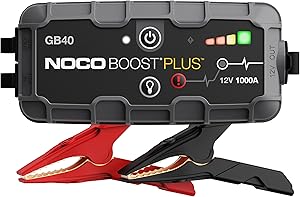
NOCO Boost GB40 1000A Jump Starter
$99.95
Buy on Amazon
Hobart Handler 140 MIG Welder
$549.00
Buy on Amazon
Chemical Guys 14-Piece Car Wash Kit
$49.99
Buy on AmazonAs an Amazon Associate, AutoAnvil earns from qualifying purchases at no extra cost to you.