Coilover vs. Lowering Springs: Which Suspension Upgrade Is Right for You?
Coilover vs. Lowering Springs: Which Suspension Upgrade Is Right for You?
Dropping your car is one of the most transformative modifications you can make — it improves handling, fills the wheel wells, and gives your build a purposeful stance. But the path to getting lower splits into two distinct camps: coilovers and lowering springs. Choosing the wrong one can mean a harsh ride, premature tire wear, or money wasted on a setup that doesn't match your goals.
This guide cuts through the marketing noise and gives you a clear framework for making the right choice.
What Are Lowering Springs?
Lowering springs are direct replacements for your factory coil springs. They are shorter and stiffer than stock, which lowers the ride height by 1–2 inches while increasing spring rate for improved cornering performance.
Pros:
- Affordable — quality sets run $150–$400
- Easy to install (use your existing shocks/struts)
- Subtle, predictable drop that works well for daily drivers
- Widely available for nearly every platform
Cons:
- Fixed drop — you cannot adjust ride height
- May cause shock/strut wear if the travel mismatch is significant
- Limited adjustability for corner weighting or alignment
Best for: Daily drivers, mild performance builds, budget-conscious builders who want improved handling without a full suspension overhaul.
What Are Coilovers?
Coilovers combine the spring and shock absorber into a single adjustable unit. The spring perch threads up and down on the shock body, allowing you to dial in precise ride height — typically 1–4 inches of adjustment range.
Pros:
- Full ride height adjustability
- Many units offer damping adjustment (rebound and/or compression)
- Allows corner weighting for track applications
- Better matched spring/shock rates for improved handling
Cons:
- Significantly more expensive — quality sets start at $800 and go to $3,000+
- More complex installation
- Budget coilovers can ride worse than quality lowering springs
Best for: Track-day cars, show cars requiring precise stance, performance builds where handling is the priority.
The Cost Breakdown
| Option | Budget Range | Best Value Pick |
|---|---|---|
| Lowering Springs | $150–$400 | Eibach Pro-Kit or H&R Sport |
| Entry Coilovers | $400–$800 | BC Racing BR Series |
| Mid-Range Coilovers | $800–$1,500 | KW Variant 1/2 |
| Performance Coilovers | $1,500–$3,000+ | Öhlins Road & Track |
Which Should You Choose?
Choose lowering springs if:
- Your car is primarily a daily driver
- Budget is under $500 for the complete setup
- You want a 1–1.5 inch drop with minimal fuss
- Your stock shocks are in good condition
Choose coilovers if:
- You track the car or plan to
- You want the ability to adjust ride height seasonally
- You are building a show car that needs precise stance
- Budget allows for $800+ on suspension
Amazon Picks
For lowering springs, the Eibach Pro-Kit remains the gold standard for daily-driven performance cars. For entry-level coilovers, the BC Racing BR Series offers the best adjustability-per-dollar ratio in the market.
FAQ
Can I use lowering springs with worn shocks?
No. Installing lowering springs on worn shocks will result in poor handling and accelerated shock failure. Replace shocks and springs together.
How much drop is too much for daily driving?
More than 2 inches of drop on a stock subframe and wheel well clearance will typically cause rubbing issues. Stick to 1–1.5 inches for a comfortable daily driver.
Do I need an alignment after installing coilovers?
Always. Any suspension change that alters ride height will affect camber, caster, and toe. Budget $80–$150 for a four-wheel alignment after installation.
Recommended for This Topic
Amazon Affiliate
BIG RED Rotating Engine Stand
$109.99
Buy on Amazon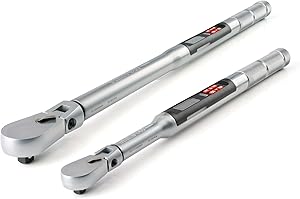
TEKTON Electronic Torque Wrench Set
$199.00
Buy on Amazon
GearWrench 239 Pc. Mechanics Tool Set
$249.00
Buy on AmazonAs an Amazon Associate, AutoAnvil earns from qualifying purchases at no extra cost to you.