
How to Check Engine Light Codes and Fix the 10 Most Common OBD-II Faults
How to Check Engine Light Codes and Fix the 10 Most Common OBD-II Faults
The check engine light is the most misunderstood warning in automotive history. It does not mean your engine is about to explode. It means the vehicle's onboard diagnostic system has detected a condition outside its expected parameters and stored a fault code.
Reading and understanding those codes is a skill every car owner should have. This guide covers the complete process.
What You Need: OBD-II Scanners
Every vehicle sold in the United States since 1996 has an OBD-II port, typically located under the dashboard on the driver's side. Any OBD-II scanner can read the codes stored in your vehicle's ECU.
Budget option: The Autel AutoLink AL319 reads and clears codes for $25–$30. It covers all OBD-II protocols and displays live data. For basic diagnosis, it is all you need.
Mid-range option: The BlueDriver Bluetooth Pro connects to your smartphone and provides manufacturer-specific codes, repair reports, and live data for $100. The repair report feature is genuinely useful — it shows the most common fixes for each code based on real repair data.
Professional option: The Autel MaxiCOM MK808 provides bidirectional control, advanced system scanning, and service functions for $300. This is the tool to buy if you work on multiple vehicles regularly.
The 10 Most Common OBD-II Fault Codes
P0420 — Catalyst System Efficiency Below Threshold (Bank 1)
What it means: The catalytic converter is not converting exhaust gases efficiently enough.
Common causes: Failed catalytic converter (most common), oxygen sensor failure, exhaust leak upstream of the converter, engine misfire that has damaged the converter.
DIY fix: Check for exhaust leaks first — they are free to fix and can trigger this code. If no leaks, test the oxygen sensors. If sensors are good, the catalytic converter likely needs replacement. Budget $150–$400 for an aftermarket unit.
P0300 — Random/Multiple Cylinder Misfire Detected
What it means: The engine is misfiring in multiple cylinders or the misfire cannot be isolated to a specific cylinder.
Common causes: Worn spark plugs (most common), bad ignition coils, fuel injector issues, vacuum leak, low compression.
DIY fix: Start with spark plugs — they are cheap and often the cause. Replace all plugs at once. If the misfire continues, test ignition coils with a swap test (move the coil from the misfiring cylinder to another and see if the misfire follows).
P0171 — System Too Lean (Bank 1)
What it means: The engine is running with too much air and not enough fuel.
Common causes: Vacuum leak (most common), dirty or failing MAF sensor, clogged fuel injectors, weak fuel pump, failing oxygen sensor.
DIY fix: Check for vacuum leaks by spraying carburetor cleaner around intake manifold gaskets and vacuum lines while the engine is running. If the idle changes, you found a leak. Clean the MAF sensor with MAF cleaner spray ($8–$12) before replacing it.
P0128 — Coolant Temperature Below Thermostat Regulating Temperature
What it means: The engine is not reaching normal operating temperature.
Common causes: Failed thermostat (stuck open) — this is the cause in 95% of cases.
DIY fix: Replace the thermostat. This is one of the easiest repairs in automotive maintenance. A thermostat costs $10–$30; the job takes 30–60 minutes on most vehicles.
P0442 — Evaporative Emission System Leak Detected (Small Leak)
What it means: The fuel vapor recovery system has a small leak.
Common causes: Loose or damaged gas cap (most common), cracked EVAP hose, failed purge valve.
DIY fix: Start by tightening or replacing the gas cap. A new gas cap costs $10–$20 and fixes this code in 30–40% of cases. If the code returns, inspect EVAP hoses for cracks.
P0455 — Evaporative Emission System Leak Detected (Large Leak)
What it means: The fuel vapor recovery system has a large leak.
Common causes: Missing or severely damaged gas cap, cracked charcoal canister, broken EVAP line.
DIY fix: Check the gas cap first. If the cap is intact, use a smoke machine to find the leak — most shops will perform this test for $50–$100.
P0401 — Exhaust Gas Recirculation Flow Insufficient
What it means: The EGR system is not flowing enough exhaust gas back into the intake.
Common causes: Clogged EGR valve (most common), failed EGR solenoid, blocked EGR passages.
DIY fix: Remove and clean the EGR valve with carburetor cleaner. Carbon buildup is the most common cause and cleaning often resolves the code. A new EGR valve costs $50–$150 if cleaning does not help.
P0113 — Intake Air Temperature Sensor Circuit High Input
What it means: The intake air temperature sensor is reading abnormally high.
Common causes: Failed IAT sensor, wiring issue, poor connection.
DIY fix: Check the sensor connector for corrosion. If the connector is clean, replace the IAT sensor — it costs $15–$40 on most vehicles.
P0507 — Idle Control System RPM High
What it means: The engine idle speed is higher than the target RPM.
Common causes: Vacuum leak, dirty throttle body, failed idle air control valve.
DIY fix: Clean the throttle body with throttle body cleaner ($8–$12). If the idle remains high, check for vacuum leaks and inspect the IAC valve.
P0340 — Camshaft Position Sensor Circuit Malfunction
What it means: The camshaft position sensor signal is absent or erratic.
Common causes: Failed camshaft position sensor, wiring issue, timing chain stretch (on high-mileage engines).
DIY fix: Replace the camshaft position sensor — it costs $20–$60 on most vehicles and takes 15–30 minutes to replace. If the code returns, inspect the wiring harness for damage.
FAQ
Can I drive with the check engine light on?
It depends on the code. A flashing check engine light indicates an active misfire that can damage the catalytic converter — stop driving immediately. A steady light indicates a stored fault that may not affect drivability but should be diagnosed promptly.
Will the check engine light turn off by itself?
If the underlying fault is corrected, the light will turn off after a set number of drive cycles (typically 3–5). You can also clear it manually with an OBD-II scanner.
How accurate are free code readers at auto parts stores?
They read the same codes as paid scanners. The limitation is that they do not provide manufacturer-specific codes or live data, which can be important for accurate diagnosis.
Recommended for This Topic
Amazon Affiliate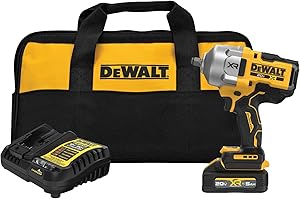
DEWALT 20V MAX XR Impact Wrench Kit
$279.00
Buy on Amazon
Chemical Guys 14-Piece Car Wash Kit
$49.99
Buy on Amazon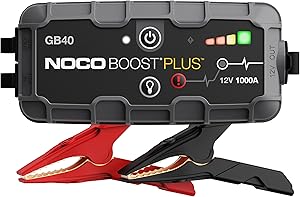
NOCO Boost GB40 1000A Jump Starter
$99.95
Buy on AmazonAs an Amazon Associate, AutoAnvil earns from qualifying purchases at no extra cost to you.