The 2026 Guide to the Best Creepers, Ramps, and Lift Stands for Safe Home Garage Work
The 2026 Guide to the Best Creepers, Ramps, and Lift Stands for Safe Home Garage Work
The best creepers, ramps, and lift stands are essential safety and efficiency tools for any DIY mechanic or project car builder working in their home garage. These pieces of equipment provide crucial access to the underside of a vehicle, elevate it safely for maintenance, or allow comfortable positioning for tasks, significantly reducing strain and the risk of injury. For DIY mechanics, investing in quality lifting and positioning equipment means safer, more comfortable, and ultimately more productive work sessions, transforming a cramped garage into a functional workspace.
Table of Contents
- Why Proper Vehicle Support is Non-Negotiable for Home Mechanics
- Creepers: Your Mobile Workbench on Wheels
- Ramps: Quick and Easy Front or Rear End Lifts
- Lift Stands: Jack Stands, Bottle Jacks, and Beyond
- Elevating Your Garage: Quick Lifts and Portable Solutions
- Setting Up Your Safe Home Garage Workspace
- Choosing the Right Equipment for Your Project
Why Proper Vehicle Support is Non-Negotiable for Home Mechanics
Working on a car at home can be incredibly rewarding, but it comes with inherent risks, especially when you're dealing with a multi-thousand-pound machine. Proper vehicle support isn't just about convenience; it's about your safety, pure and simple. Whether you're changing oil, rotating tires, or undertaking a full engine swap, getting the vehicle off the ground safely and securely is the first, most critical step. Skimping on quality or understanding how to use your lifting equipment correctly can turn a routine maintenance task into a life-threatening situation. As DIY mechanics, we often push boundaries and tackle complex jobs, making robust and reliable support equipment an absolute necessity.
Understanding the Risks: Why Cheap Out is Dangerous
When it comes to supporting a vehicle, there's no such thing as "good enough." The risks associated with inadequate or improperly used lifting equipment are severe, ranging from serious injury to fatality. Imagine being pinned under a vehicle that weighs several tons – the outcome is rarely positive. Cheap, flimsy jack stands, worn-out ramps, or a creeper with failing wheels can all contribute to catastrophic failure.
The primary dangers include:
- Vehicle Collapse: The most obvious and terrifying risk. If a jack stand fails, a ramp slips, or a jack gives way, the vehicle can crush anything beneath it. This is why you never rely solely on a hydraulic jack for support.
- Instability: Even if the equipment doesn't outright fail, an unstable setup can cause the vehicle to rock, shift, or fall off its supports if bumped or if weight distribution changes during work.
- Ergonomic Injuries: While not immediately life-threatening, working in awkward positions due to poor access can lead to back strain, neck pain, shoulder injuries, and repetitive stress injuries over time. This impacts your ability to continue working on your project car.
- Tool Damage: A collapsing vehicle can also destroy expensive tools, equipment, and even parts you've just installed.
Investing in quality equipment from reputable brands, and more importantly, understanding how to use it correctly, mitigates these risks significantly. Always prioritize safety over saving a few bucks. Your life and well-being are worth far more than the cost of a good set of jack stands or a sturdy creeper.
The Ergonomics of Under-Car Work: Comfort and Efficiency
Beyond safety, the right lifting and positioning equipment dramatically improves your comfort and efficiency. Anyone who's spent hours contorted under a car on a cold concrete floor knows the toll it takes on your body. A good creeper, for instance, allows you to glide effortlessly under the vehicle, reducing strain on your back, neck, and knees.
Consider these ergonomic benefits:
- Reduced Strain: Creepers keep you off the hard ground, minimizing pressure points and allowing for more natural body positioning. Lift stands and ramps provide ample clearance, meaning less bending, twisting, and reaching.
- Improved Access: When a vehicle is properly elevated, you have better visibility and more room to maneuver tools. This isn't just about comfort; it means you can perform tasks more accurately and efficiently, reducing the likelihood of mistakes or stripped bolts.
- Increased Productivity: Less discomfort translates to longer, more productive work sessions. You won't be stopping every 20 minutes to stretch your back or rub your knees.
- Enhanced Focus: When you're comfortable and not worried about the car falling on you, you can concentrate fully on the task at hand, leading to better quality work.
For serious project car builders, comfort isn't a luxury; it's a necessity that directly impacts the quality and speed of your build. Don't underestimate the power of a comfortable workspace.
Decoding Weight Capacities and Safety Standards
Understanding weight capacities and adhering to safety standards is paramount for any lifting equipment. Every piece of equipment – jacks, jack stands, ramps, and even creepers – will have a specified weight capacity. This is not a suggestion; it's a hard limit.
Here's what you need to know:
- Gross Vehicle Weight Rating (GVWR): This is the maximum operating weight of your vehicle, including its own weight, fuel, passengers, and cargo. You can usually find this on a sticker inside the driver's side door jamb or in your owner's manual. Your lifting equipment must be rated to handle at least the GVWR of your heaviest vehicle.
- Per-Axle vs. Total Capacity: For jack stands and ramps, the stated capacity is often per pair or per stand. If a jack stand is rated for 3 tons, that typically means a pair can support 6 tons, but it's safer to assume each stand supports 3 tons. Always check the manufacturer's specific instructions. When lifting an entire vehicle, ensure the sum of the capacities of your jack stands exceeds the vehicle's GVWR.
- Safety Factor: Manufacturers build in a safety factor, but you should never rely on it to exceed the stated capacity. It's there to account for manufacturing variances and unexpected stresses, not to give you permission to lift a heavier vehicle.
- ANSI/ASME Standards: Look for equipment that meets recognized safety standards like ANSI (American National Standards Institute) or ASME (American Society of Mechanical Engineers). These certifications indicate that the product has been tested to specific safety and performance criteria.
- Always Use in Pairs (or more): Jack stands should always be used in pairs, and ideally, you should use four when lifting an entire vehicle. Ramps are also used in pairs.
Comparison Table: Lifting Equipment Capacity Considerations
| Equipment Type | Stated Capacity | Practical Application | Key Safety Note |
|---|---|---|---|
| Floor Jack | Single Unit | Lifting one corner/end | NEVER rely solely on a jack for support. |
| Jack Stands | Per Pair/Stand | Supporting lifted vehicle | Always use in pairs, ensure stable contact points. |
| Car Ramps | Per Pair | Lifting one axle | Ensure ramps are securely placed and vehicle is centered. |
| Engine Stand | Single Unit | Holding engine block | Verify engine weight against stand capacity. |
| Transmission Jack | Single Unit | Supporting transmission | Ensure load is centered and secured. |
By meticulously checking weight ratings and adhering to safety guidelines, you're building a foundation of safety for every project you undertake. Never guess; always verify.
Creepers: Your Mobile Workbench on Wheels
A good creeper is more than just a board with wheels; it's an extension of your body, allowing you to move freely and comfortably under a vehicle. It transforms the often-cramped space beneath your car into a functional workspace, saving your back, neck, and knees from the unforgiving concrete. For any DIY mechanic spending significant time under a vehicle, a quality creeper is an indispensable tool.
Traditional Lay-Flat Creepers: The Classic Choice
The traditional lay-flat creeper is the most common and often the most affordable type. It consists of a padded board (or a molded plastic body) mounted on a set of wheels, typically six. This design allows you to lie flat on your back and roll smoothly under the vehicle.
Key Features and Considerations:
- Comfort: Look for thick, durable padding that can withstand oil, grease, and cleaners. Vinyl or similar materials are easy to wipe down. Some creepers feature ergonomic contours to support your head and shoulders.
- Ground Clearance: This is crucial. A low-profile creeper allows you to get under vehicles with minimal lift. Measure the clearance of your lowest vehicle and choose a creeper that fits.
- Wheels: The quality of the wheels makes a huge difference. Large, robust, oil-resistant urethane or rubber casters roll more smoothly over cracks and debris than small, hard plastic ones. Swivel casters are essential for maneuverability.
- Frame Material: Steel frames offer superior durability and weight capacity compared to all-plastic models, though high-quality molded plastic can be surprisingly robust.
- Storage: Some creepers have built-in tool trays or magnetic strips for small parts, which can be incredibly convenient.
While simple, a well-made traditional creeper can make hours of under-car work feel significantly less grueling. It's often the first "comfort" tool a new DIY mechanic buys.
🔧 Recommended Tool: Astro Pneumatic 78827 Creeper
This low-profile, ergonomic creeper with large, smooth-rolling wheels is perfect for tight spaces and comfortable under-car work, reducing strain on your back and neck.
[Amazon link: https://www.amazon.com/dp/B001DXHJ7G?tag=seperts-20]
Transformable Creepers: Versatility for Varied Tasks
For mechanics who need more versatility, transformable creepers offer a clever solution. These innovative designs can switch between a traditional lay-flat creeper and a mechanic's seat, often with multiple reclining positions. This makes them ideal for tasks that require working at different heights, such as brake jobs, wheel well access, or engine bay work from the side.
Benefits of Transformable Creepers:
- Dual Functionality: Get two tools in one, saving space and money. You can roll under the car, then quickly convert it to a seat for working on tires or fender areas.
- Adjustable Comfort: The ability to recline or sit upright provides ergonomic benefits for a wider range of tasks, reducing fatigue.
- Space Saving: Instead of needing a separate creeper and mechanic's stool, you have one unit that does both.
Considerations:
- Complexity: More moving parts mean more potential points of failure, though reputable brands design these to be robust.
- Weight and Bulk: They can sometimes be heavier or bulkier than a simple lay-flat creeper.
- Cost: Generally more expensive than basic creepers, but the added functionality often justifies the price.
When choosing a transformable creeper, pay close attention to the locking mechanisms for the different positions. They should be secure and easy to operate, ensuring stability whether you're lying down or sitting up.
Specialty Creepers: Topside, Bone, and Off-Road Options
Beyond the standard and transformable types, several specialty creepers cater to specific needs and environments.
- Topside Creepers: These unique creepers allow you to lean over the engine bay, providing comfortable access to the engine from above without straining your back. They typically feature a padded chest rest and a sturdy, adjustable frame that straddles the engine compartment. Ideal for engine work, fluid checks, or anything that requires reaching deep into the bay.
- "Bone" Creepers: Named for their distinctive ribbed, high-density polyethylene construction, Bone Creepers are known for their extreme durability and ergonomic design. They often feature large, robust wheels that can handle rough, uneven garage floors or even gravel driveways, making them a favorite for those who work outside or in less-than-perfect garage conditions. Their open design also prevents dirt and debris from accumulating.
- Off-Road/Rough Terrain Creepers: Similar to Bone Creepers but often with even larger, more aggressive wheels, these are designed for mechanics who frequently work on uneven surfaces, dirt, or gravel. They prioritize wheel durability and ground clearance to navigate challenging environments.
Choosing a specialty creeper depends entirely on your specific needs and the type of work you do. If you're constantly leaning over an engine, a topside creeper is a game-changer. If your garage floor is a minefield of cracks and debris, a Bone or off-road creeper will save you endless frustration.
Ramps: Quick and Easy Front or Rear End Lifts
Car ramps offer a simple, quick, and generally very safe way to lift one end of a vehicle for routine maintenance tasks. Unlike jacks, which require separate jack stands for safety, ramps provide a solid, stable platform from the moment the vehicle is driven onto them. They are particularly useful for oil changes, exhaust work, or inspecting the underside of the front or rear of a car.
Steel Ramps vs. Plastic/Poly Ramps: Durability and Weight
When selecting car ramps, you'll primarily choose between steel and plastic (or high-density polyethylene) construction. Each material has distinct advantages and disadvantages.
Steel Ramps:
- Durability: Incredibly strong and durable, capable of handling very heavy vehicles. They are less prone to cracking or deforming under stress.
- Weight Capacity: Typically offer higher weight capacities than plastic ramps.
- Stability: Their weight contributes to stability on the garage floor.
- Drawbacks: Heavy, can be cumbersome to move and store. Can rust if not properly maintained or if exposed to moisture. The metal-on-concrete contact can sometimes cause them to slide if not properly secured or if the floor is slick.
Plastic/Poly Ramps:
- Lightweight: Much lighter and easier to move, carry, and store.
- No Rust: Immune to rust, making them suitable for outdoor use or damp environments.
- Non-Slip: Often designed with rubber feet or anti-slip surfaces that grip the garage floor better than bare steel.
- Low Profile Options: Many plastic ramps are designed with a gentler incline, making them ideal for low-clearance vehicles.
- Drawbacks: Generally have lower weight capacities than steel. Can crack or break if overloaded, dropped, or subjected to extreme temperatures. Quality varies significantly, so choose reputable brands.
For most DIY mechanics, high-quality poly ramps offer a great balance of durability, ease of use, and adequate weight capacity for typical passenger vehicles. If you're working on heavy trucks or commercial vehicles, steel might be the more robust choice.
Low-Profile Ramps for Sports Cars and Lowered Vehicles
One common challenge for owners of sports cars, lowered vehicles, or cars with aerodynamic body kits is simply getting them onto standard ramps or even a floor jack. The approach angle of most ramps is too steep, causing the front bumper or undercarriage to scrape before the tires even reach the ramp.
This is where low-profile ramps come in. These ramps are specifically designed with a much gentler incline, allowing vehicles with minimal ground clearance to drive up without scraping.
Key Features of Low-Profile Ramps:
- Extended Length and Gentle Incline: The ramp surface is longer, distributing the incline over a greater distance, which reduces the approach angle.
- Integrated Ramps (Two-Piece Designs): Some low-profile ramps are actually two-piece systems. A smaller, very shallow ramp allows the tire to get onto the main ramp, or they feature a removable section that allows the main ramp to sit flush with the ground after the car is driven on.
- Material: Often made from high-density plastic or composite materials to keep them lightweight while maintaining strength.
If you own a vehicle with less than 5-6 inches of ground clearance, investing in a good set of low-profile ramps is a must. Trying to force a low car onto standard ramps is a recipe for body damage.
Ramp Safety Best Practices: Placement and Use
While ramps are generally safer than relying solely on a jack, proper usage is critical to prevent accidents.
Checklist Block: Ramp Safety Essentials
✅ Flat, Level Surface: Always use ramps on a hard, flat, and level surface. Uneven ground can cause the vehicle to shift or the ramps to tip.
✅ Clean Ramps and Tires: Ensure ramps are free of oil, grease, or debris that could reduce traction. Your tires should also be relatively clean.
✅ Proper Placement: Position ramps squarely in front of the tires you intend to lift. They should be perfectly aligned with the direction of travel.
✅ Slow and Steady: Drive onto the ramps slowly and steadily. Have a spotter if possible. Stop immediately once your tires are fully seated in the ramp's cradle.
✅ Engage Parking Brake: Once on the ramps, engage the parking brake firmly.
✅ Chock the Unlifted Wheels: This is absolutely critical. Place wheel chocks securely behind the wheels that remain on the ground to prevent any backward movement.
✅ Test Stability: Gently push and pull on the vehicle (once the parking brake is set and wheels chocked) to ensure it's stable and won't roll off the ramps.
✅ Never Exceed Capacity: Always verify your vehicle's weight against the ramp's stated capacity.
✅ Inspect Before Use: Regularly check ramps for cracks, damage, or excessive wear, especially plastic ramps.
By following these simple steps, you can ensure that using car ramps is a safe and efficient way to gain access to your vehicle's underside.
Lift Stands: Jack Stands, Bottle Jacks, and Beyond
When you need to lift a vehicle higher than ramps allow, or you need to remove wheels, a combination of a jack and jack stands becomes essential. This category of equipment is the backbone of safe vehicle lifting in any home garage. Understanding the different types and their proper use is fundamental for any DIY mechanic.
The Indispensable Jack Stand: Your Vehicle's Safety Net
Jack stands are the single most important safety device when working under a lifted vehicle. Let me repeat that: never, ever get under a vehicle that is supported only by a hydraulic jack. Jacks are designed for lifting, not for sustained support. They can fail due to hydraulic leaks, seals giving way, or simply being bumped. Jack stands are mechanical devices that provide solid, unyielding support.
Key Features and Considerations:
- Capacity: As discussed earlier, match the capacity of your jack stands to your vehicle's GVWR, always erring on the side of caution. Common capacities are 2-ton, 3-ton, and 6-ton per pair.
- Construction: Look for heavy-duty steel construction. Welds should be clean and robust.
- Base Design: A wide, stable base (often a pyramid or tripod design) is crucial for preventing tipping.
- Height Adjustment: Most jack stands use a ratcheting mechanism or a pin-and-hole system. The ratcheting type is quicker to adjust, while the pin type is often considered more secure due to the solid pin locking it in place. Ensure the locking mechanism is robust and easy to engage.
- Saddle Type: The top of the stand (the saddle) can be flat, V-shaped, or U-shaped. V-shaped saddles are common and work well with frame rails. Some stands have rubber pads to prevent scratching and provide better grip.
- Minimum and Maximum Height: Ensure the stands can reach the desired lift height for your vehicle while also being able to fit under it at a lower point.
Step 1 of 4: Lifting with Jack Stands - Preparation
Before you even touch the jack, ensure your vehicle is on a flat, level, and hard surface. Concrete is ideal. Never lift on gravel, dirt, or asphalt that might deform under pressure. Gather your tools: your floor jack, two or four jack stands (depending on how many wheels you're lifting), and wheel chocks. Consult your vehicle's owner's manual to identify the proper jacking points and jack stand placement points. These are usually reinforced areas of the frame or pinch welds.
Step 2 of 4: Lifting the Vehicle
Position your floor jack under the designated jacking point. Ensure the jack's saddle makes full and secure contact with the jacking point. Slowly and steadily pump the jack handle to raise the vehicle. As the vehicle lifts, keep an eye on the jack and the vehicle to ensure stability. Lift the vehicle slightly higher than the desired working height, as the jack stands will take up some vertical space.
Step 3 of 4: Placing and Securing Jack Stands
Once the vehicle is at the desired height, position your jack stands directly under the designated jack stand points, which are typically different from the jacking points. Adjust the jack stands to the appropriate height, ensuring they are securely locked. Lower the vehicle slowly onto the jack stands. The weight of the vehicle should rest entirely on the jack stands, not on the hydraulic jack. Once the vehicle is resting on the stands, remove the jack (or leave it lightly touching for an extra layer of security, but not bearing weight).
Step 4 of 4: Final Stability Check and Wheel Chocks
With the vehicle fully supported by the jack stands, give it a firm shake or push to confirm stability. There should be no wobbling or shifting. Finally, place wheel chocks securely behind the wheels that are still on the ground to prevent any accidental rolling. Only now is it safe to get under the vehicle. Remember, safety is paramount.
🔧 Recommended Tool: Craftsman 3-Ton Floor Jack
This robust 3-ton floor jack provides reliable lifting power for most cars and light trucks, featuring a wide stance for stability and a quick-lift pump for efficiency.
[Amazon link: https://www.amazon.com/dp/B07BFMKWQ9?tag=seperts-20]
Bottle Jacks and Floor Jacks: Lifting Powerhouses
Jacks are the tools that get the vehicle off the ground, allowing you to then place your jack stands. There are two primary types for home garage use: bottle jacks and floor jacks.
Bottle Jacks:
- Compact Power: These are hydraulic jacks with a vertical ram, resembling a bottle. They offer immense lifting power in a compact form factor, making them excellent for heavy trucks, SUVs, or for lifting specific components like axles or transmissions.
- High Capacity: Often available in very high capacities (e.g., 6-ton, 12-ton, 20-ton).
- Drawbacks: Their vertical design means they require significant clearance to fit under a vehicle and can be less stable than floor jacks due to a smaller footprint. They are also less ideal for quickly lifting an entire side of a car.
Floor Jacks (Trolley Jacks):
- Versatility and Stability: These are the workhorses of most home garages. They have a long handle, a low-profile body, and a wide base with wheels, making them stable and easy to maneuver under a vehicle.
- Reach: Their long reach allows you to get to central jacking points, enabling you to lift one entire end of a vehicle with a single jack.
- Speed: Many modern floor jacks feature "quick lift" or "rapid pump" mechanisms that raise the saddle quickly to the jacking point.
- Drawbacks: Can be heavy and bulky to store. Lower-end models may have less durable components.
Choosing Between Them: For general automotive work on cars and light trucks, a good quality floor jack is usually the best all-around choice due to its versatility, stability, and ease of use. A bottle jack might be a valuable addition if you frequently work on very heavy vehicles or need to lift specific components with limited space. Always remember: jacks are for lifting, jack stands are for supporting.
Specialty Lift Stands: Transmission, Engine, and Wheel Stands
Beyond the general-purpose jack stands, several specialty lift stands are designed for specific tasks and components, making complex jobs much safer and more manageable.
- Transmission Jacks: These are specialized hydraulic jacks designed to support, raise, and lower heavy transmissions during removal or installation. They feature a wide, adjustable saddle that cradles the transmission securely, often with straps to hold it in place. This prevents damage to the transmission and injury to the mechanic.
- Engine Stands: Once an engine is removed from the vehicle, an engine stand allows you to mount it securely and rotate it 360 degrees, providing easy access to all sides for rebuilding, painting, or maintenance. They typically have a heavy-duty steel frame with a mounting plate that bolts to the engine block.
- Wheel Stands/Dollies: These are not for lifting the entire vehicle but are invaluable for moving heavy wheels and tires around the garage, especially when working on larger trucks or performance vehicles with wide tires. Some allow you to easily align a wheel with the hub during installation.
- Axle Stands: While similar to jack stands, some axle stands are designed specifically to cradle an axle tube, offering a more secure fit for certain vehicle types.
These specialty stands are not always necessary for every DIY mechanic, but for those undertaking major projects like engine swaps, transmission replacements, or full restorations, they are essential tools that significantly improve safety, efficiency, and ergonomics. They transform a difficult, two-person job into a manageable one-person task.
🔧 Recommended Tool: Pittsburgh Automotive 1500 lb. Engine Stand
This heavy-duty engine stand is ideal for securely holding and rotating engine blocks up to 1500 lbs, making engine rebuilds and maintenance much easier and safer.
[Amazon link: https://www.amazon.com/dp/B000KKWQV0?tag=seperts-20]
Elevating Your Garage: Quick Lifts and Portable Solutions
For the serious project car builder or the DIY mechanic with a dedicated garage space, traditional jacks and stands, while indispensable, can sometimes feel limiting. This is where quick lifts and portable car lifts come into play, offering significantly more working height and convenience, bridging the gap between a home garage and a professional shop.
Mid-Rise and Scissor Lifts: Bridging the Gap to Professionalism
Mid-rise and scissor lifts offer a substantial upgrade in terms of working height and accessibility compared to traditional methods. They lift the vehicle typically 2-4 feet off the ground, providing excellent access to the undercarriage while still being relatively compact for a home garage.
Mid-Rise Lifts:
- Design: These lifts typically use two platforms or arms that slide under the vehicle's frame or designated lift points. They lift the vehicle straight up, often using hydraulic cylinders.
- Access: They provide good access to the center of the vehicle for exhaust work, drivetrain maintenance, and general undercarriage inspections.
- Space: They require a relatively flat, level concrete floor and sufficient overhead clearance. When lowered, some models are flush with the floor, while others sit a few inches proud.
- Portability: Some mid-rise lifts are portable, allowing them to be moved around the garage when not in use, though they are still quite heavy.
Scissor Lifts:
- Design: Utilize a "scissor" mechanism to lift the vehicle. They can be full-rise (lifting the vehicle several feet high) or mid-rise.
- Footprint: Often have a smaller footprint when lowered compared to two-post lifts, making them suitable for garages with limited space.
- Access: Similar to mid-rise lifts, they provide good undercarriage access, though the scissor mechanism itself can sometimes obstruct access to certain central areas.
- Types: Available in flush-mount (recessed into the floor), surface-mount, and portable versions.
Both mid-rise and scissor lifts are significant investments but offer unparalleled convenience, safety, and ergonomic benefits for extensive work. They drastically reduce the physical strain of working on a car, allowing for longer, more enjoyable work sessions.
Portable Car Lifts: The Ultimate Home Garage Upgrade
The concept of a "portable car lift" has revolutionized the home garage for many enthusiasts. These are generally smaller, more compact versions of professional lifts, designed to be moved and stored when not in use, yet still provide substantial lifting height.
Popular Portable Lift Types:
- QuickJack: This is perhaps the most well-known portable lift system. It consists of two separate frames that slide under the vehicle's pinch welds or frame rails. Using an external hydraulic power unit, they lift the vehicle quickly and securely to a comfortable working height (typically 20-24 inches). They are easily stored against a wall when not in use.
- Ramp-Style Portable Lifts: These combine elements of ramps and jacks. The vehicle drives onto low-profile ramps, and then a hydraulic or electric mechanism lifts the ramps (and the vehicle) to a higher working height.
- Single Post Lifts: While less common for home use due to their footprint, some compact single-post lifts offer significant lift height and can be bolted down or semi-portable.
Benefits of Portable Lifts:
- Increased Working Height: Far more clearance than jack stands, allowing for comfortable standing or stool-height work.
- Safety: They offer a much more stable and secure lifting platform than traditional jacks and stands alone.
- Portability/Storage: Designed to be moved and stored, making them ideal for multi-purpose garages.
- Versatility: Great for everything from oil changes and tire rotations to transmission swaps and suspension work.
For the serious home builder, a quality portable car lift is often the ultimate upgrade, transforming the garage into a truly professional-level workspace. It's an investment that pays dividends in safety, comfort, and project efficiency.
Installation and Space Considerations for Advanced Lifts
Before you pull the trigger on a mid-rise, scissor, or portable lift, it's crucial to carefully consider your garage's capabilities and limitations. These are not impulse buys.
Key Considerations:
- Floor Requirements:
- Concrete Thickness: Most lifts require a minimum concrete thickness, typically 4-6 inches, and a specific PSI rating (e.g., 3000 PSI). This is critical for safety, especially for bolted-down lifts.
- Levelness: The floor must be perfectly level. Uneven floors can compromise stability and cause undue stress on the lift mechanism.
- Cracks/Damage: Any significant cracks or damage to the concrete slab should be addressed before installation.
- Overhead Clearance: Measure your garage ceiling height carefully. Add the maximum lift height of the equipment to the height of your tallest vehicle. Ensure there's enough room to raise the vehicle fully without hitting the ceiling, garage door, or lights. Don't forget that garage door openers can also take up valuable space.
- Power Requirements: Many hydraulic lifts require a dedicated 220V (or sometimes 110V) electrical outlet. Ensure your garage's electrical system can handle the load.
- Footprint and Maneuverability:
- Storage Space: Even portable lifts require space for storage when not in use.
- Working Space: Consider how much space the lift takes up when in use and if you'll still have room to walk around the vehicle and access tools.
- Installation: While some portable lifts are relatively easy to set up, larger mid-rise or scissor lifts may require professional installation or a significant DIY effort, including anchoring to the floor.
Thorough planning and measurement are essential to ensure your new lift integrates seamlessly and safely into your home garage. Don't assume; measure everything twice.
Setting Up Your Safe Home Garage Workspace
A well-organized and safely equipped garage is the foundation of any successful project car build. Having the right creepers, ramps, and lift stands is just one part of the equation; knowing how to integrate them into a safe and efficient workflow is equally important. This section focuses on practical steps to optimize your workspace.
The Essential Lifting Equipment Checklist
Before starting any under-car work, run through this mental or physical checklist to ensure you have all the necessary equipment and that it's in good working order.
Checklist Block: Essential Lifting Equipment
✅ Floor Jack: Appropriately rated for your vehicle's weight, in good working condition (no leaks, smooth operation).
✅ Jack Stands (minimum 2, ideally 4): Rated for your vehicle's weight, sturdy construction, reliable locking mechanism.
✅ Wheel Chocks: Heavy-duty, non-slip chocks for the wheels remaining on the ground.
✅ Creepers (optional, but highly recommended): Clean wheels, comfortable padding, appropriate ground clearance.
✅ Ramps (optional, for specific tasks): Correct weight capacity, low-profile if needed, anti-slip features.
✅ Gloves: Protect your hands from grease, sharp edges, and chemicals.
✅ Safety Glasses: Non-negotiable for any work under a car to protect against falling debris, fluids, or sparks.
✅ Work Light: A bright, durable LED work light is crucial for visibility under the vehicle.
✅ Fire Extinguisher: Always have a readily accessible ABC-rated fire extinguisher.
✅ First Aid Kit: For minor cuts and scrapes.
✅ Mobile Phone: Charged and accessible in case of emergency.
Having these items readily available and in good condition is the first step towards a safe and productive work session.
Maintaining Your Lifting Gear: Inspection and Care
Even the best equipment can fail if not properly maintained. Regular inspection and care will extend the life of your creepers, ramps, and lift stands, and more importantly, ensure their continued safety.
- Jack Stands:
- Visual Inspection: Before each use, check for bent components, cracked welds, rust, or deformation.
- Locking Mechanism: Ensure the ratcheting pawl or pin engages fully and securely.
- Base: Check for any damage to the base that might compromise stability.
- Cleaning: Wipe off excessive grease or dirt to prevent corrosion.
- Floor Jacks:
- Hydraulic Fluid: Check the fluid level periodically (refer to your jack's manual). Top off with appropriate hydraulic jack oil if low.
- Leaks: Look for any signs of hydraulic fluid leaks around the ram, pump, or seals. A leaking jack is a failing jack.
- Operation: Test the jack's lifting and lowering function. It should operate smoothly without excessive effort or binding.
- Wheels: Ensure wheels roll freely and are not damaged.
- Cleanliness: Keep the jack clean to prevent dirt from contaminating the hydraulic system.
- Ramps:
- Cracks/Deformation: Inspect plastic ramps for any cracks, especially around the load-bearing areas. Check steel ramps for severe dents or bends.
- Anti-Slip Surfaces: Ensure rubber feet or anti-slip treads are intact and effective.
- Rust: For steel ramps, address any significant rust spots promptly.
- Creepers:
- Wheels/Casters: Check that all wheels spin freely and are securely attached. Replace damaged casters.
- Padding: Inspect padding for tears or excessive wear.
- Frame: Look for bent or broken frame components.
Store all lifting equipment in a clean, dry place to prevent rust and degradation. Treat your safety equipment with the respect it deserves, and it will serve you well for years to come.
Case Study: The Weekend Warrior's Garage Transformation
Case Study: The Weekend Warrior — Before/After
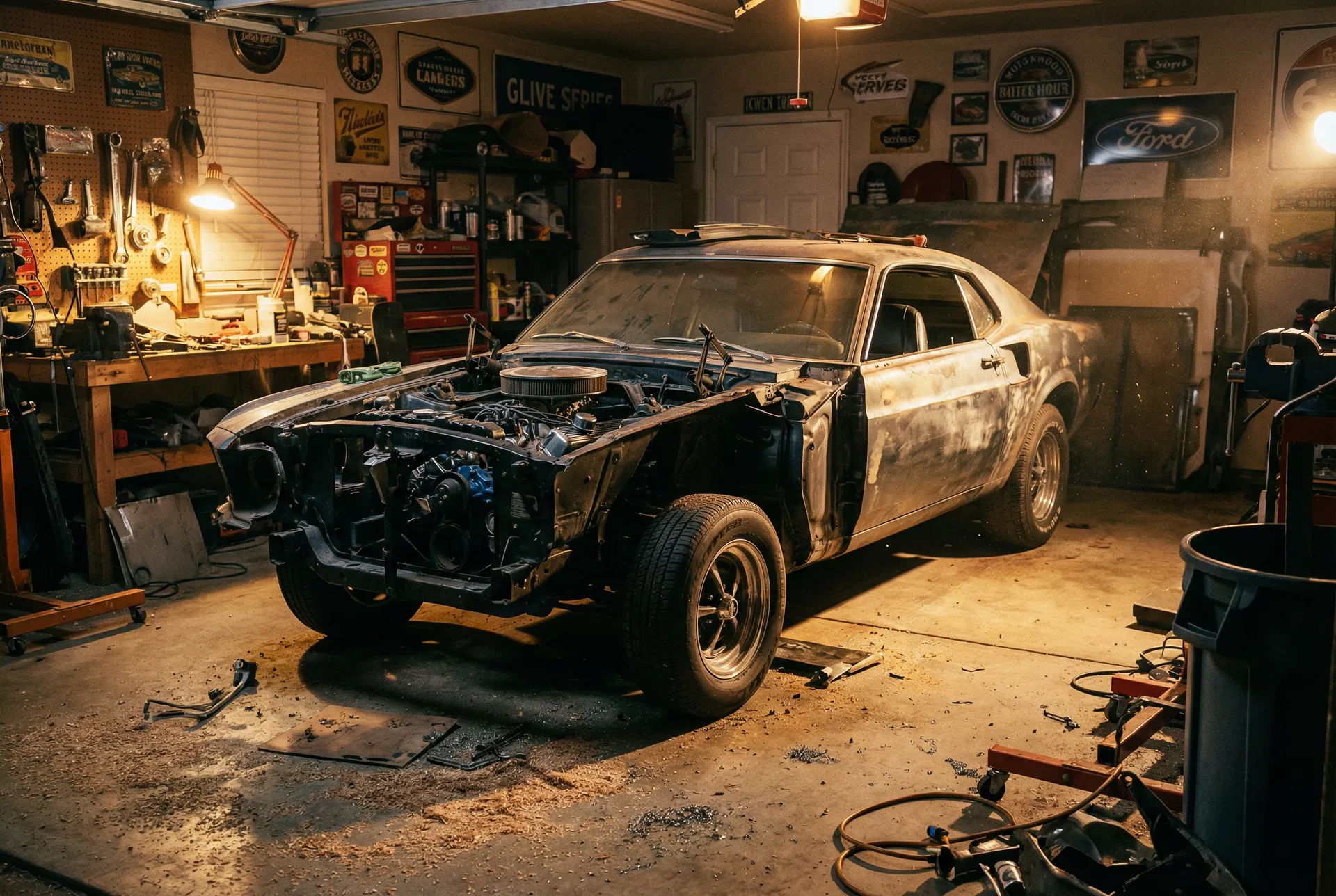
Before: Mark, a dedicated weekend warrior, loved working on his classic Mustang. However, his garage setup was rudimentary. He relied on an old, leaky 2-ton floor jack and a mismatched pair of rusty jack stands he inherited. For under-car work, he'd often just lay on a piece of cardboard on the cold, cracked concrete floor. Jobs like exhaust swaps were a nightmare, taking twice as long due to poor access and constant discomfort. He frequently suffered from back pain and scraped knuckles. Safety was a constant, nagging concern, especially when the old jack would slowly sink over an hour.
After: Frustrated with the discomfort and safety risks, Mark decided to invest in his garage. He started by purchasing a new, high-quality 3-ton low-profile floor jack and a set of four robust 6-ton jack stands with wide bases. He also bought an ergonomic, low-profile creeper with large urethane wheels. For quick oil changes, he added a pair of heavy-duty poly car ramps.
The transformation was immediate. With the new jack and stands, he could confidently lift his Mustang and know it was securely supported. The creeper allowed him to glide effortlessly under the car, reducing strain and improving his access to bolts and components. Oil changes became a 15-minute breeze with the ramps. He even tackled a full suspension overhaul, a job he'd previously dreaded, with newfound confidence and comfort. His back pain significantly decreased, and his projects moved faster. Mark realized that investing in proper lifting and support equipment wasn't just about convenience; it was about safety, efficiency, and ultimately, the enjoyment of his hobby. His garage went from a risky, uncomfortable workspace to a safe, productive haven for his passion.
Choosing the Right Equipment for Your Project
Selecting the right creepers, ramps, and lift stands isn't a one-size-fits-all decision. It depends heavily on the type of vehicles you work on, the scope of your projects, and your budget. Making informed choices will ensure you have the most effective and safest tools for your specific needs.
Matching Equipment to Vehicle Type and Project Scope
The first step in choosing equipment is to honestly assess your current and future project needs.
Considerations for Vehicle Type:
- Small Cars/Sedans: Most 2-3 ton floor jacks and jack stands will suffice. Standard car ramps are usually fine, but low-profile ramps might be needed for sportier models.
- Trucks/SUVs: These require higher capacity equipment (e.g., 3-6 ton jack stands, higher capacity floor jacks or bottle jacks). Ensure your ramps can handle the increased weight and tire width.
- Lowered Vehicles/Sports Cars: Absolutely require low-profile ramps and a low-profile floor jack to get under the vehicle without scraping.
- Classic Cars/Restorations: May benefit from specialty items like engine stands or transmission jacks for component-level work.
Considerations for Project Scope:
- Basic Maintenance (Oil Changes, Tire Rotations): Ramps are excellent for quick oil changes. A floor jack and two jack stands are sufficient for tire rotations. A good creeper makes under-car checks much more comfortable.
- Brake Jobs/Suspension Work: Requires a floor jack and at least two jack stands (preferably four if removing all wheels). A creeper is invaluable.
- Exhaust Work/Drivetrain Maintenance: Ramps or a floor jack with four jack stands will provide good access. A creeper is essential. A mid-rise or portable lift would be a game-changer for these types of jobs.
- Engine/Transmission Swaps: This is where specialty equipment like engine stands, transmission jacks, and potentially a portable or mid-rise lift become highly beneficial, if not necessary, for safety and efficiency.
Don't buy equipment that's overkill for your needs, but also don't under-spec your tools, especially when safety is involved.
Budgeting for Safety: Where to Invest Your Dollars
Lifting equipment is one area where you should never prioritize cost savings over quality and safety. However, you can make smart budgeting decisions.
Where to Invest Heavily:
- Jack Stands: These are your primary safety net. Buy the best quality, highest-rated jack stands you can afford from reputable brands. Don't skimp here.
- Floor Jack: A good quality, stable floor jack with a smooth pump and reliable release mechanism is worth the investment. It will last longer and operate more safely.
- Portable Lifts (if applicable): If you're going this route, these are significant investments, and quality directly correlates with safety and longevity.
Where You Can Be More Flexible:
- Creepers: While a good creeper is great, a basic, sturdy one will still offer significant comfort over lying on the floor. You can upgrade later.
- Ramps: High-quality plastic ramps are often sufficient and more affordable than heavy-duty steel. Just ensure they meet weight requirements.
General Budgeting Tips:
- Buy in Sets: Often, jacks and jack stands are sold in sets, which can offer better value.
- Look for Sales: Keep an eye out for sales from reputable automotive tool suppliers.
- Prioritize: If your budget is tight, prioritize jack stands, then a good floor jack, then other comfort/convenience items.
- Consider Used (with extreme caution): If buying used lifting equipment, inspect it meticulously for damage, rust, or modifications. It's often safer to buy new for critical safety items.
Remember, the cost of an accident far outweighs the cost of quality equipment.
Future-Proofing Your Garage: Scalability and Upgrades
As your skills grow and your projects become more ambitious, your garage setup should be able to evolve with you. Thinking about scalability and future upgrades can save you money and headaches down the line.
- Start with the Basics, but Buy Quality: Begin with a solid foundation of a good floor jack and four reliable jack stands. These will always be useful, even if you eventually get a full lift.
- Consider Modular Systems: Some portable lift systems can be expanded or accessorized.
- Plan for Space: Even if you don't have the budget for a mid-rise lift now, consider if your garage has the ceiling height and floor strength to accommodate one in the future. This might influence renovation decisions.
- Versatile Tools: Opt for tools that can serve multiple purposes. A transformable creeper, for example, offers more utility than a single-purpose one.
- Invest in Storage: As you acquire more equipment, good storage solutions (wall mounts, shelving, tool chests) become crucial for keeping your garage organized and safe.
By thinking ahead, you can build a garage that not only meets your current needs but also supports your passion for project cars for years to come. AutoAnvil is dedicated to helping you make these smart choices.
Frequently Asked Questions
Q: Can I use concrete blocks or wood instead of jack stands?
A: Absolutely not. Never use concrete blocks, wood, or any other makeshift support instead of proper jack stands. Concrete can crumble under pressure, wood can split, and neither offers the stability or engineered safety of steel jack stands. This is an extremely dangerous practice that can lead to severe injury or death.
Q: How do I know the correct jacking points and jack stand placement for my car?
A: Always consult your vehicle's owner's manual. It will clearly illustrate the designated jacking points (where to place your jack) and the recommended jack stand placement points (usually reinforced frame rails or pinch welds) to avoid damage and ensure stability.
Q: My hydraulic jack slowly sinks over time. Is this normal?
A: No, a hydraulic jack should hold its position firmly. Slow sinking indicates a hydraulic fluid leak or failing seals within the jack. This is a significant safety hazard. The jack should be repaired or replaced immediately, and never relied upon for support.
Q: What's the minimum number of jack stands I should own?
A: You should own at least two jack stands for lifting one end of a vehicle. However, for most comprehensive work, especially if you plan to remove all wheels or work on the drivetrain, a set of four jack stands is highly recommended for maximum stability and safety.
Q: Are plastic car ramps safe, or should I only buy steel?
A: High-quality plastic (polyethylene) car ramps from reputable brands are generally very safe for their intended use and weight capacity. They are often lighter and have better anti-slip properties than steel. Always check the weight rating and inspect them for cracks or damage before each use.
Q: Can I leave my car on ramps or jack stands for an extended period?
A: Yes, vehicles can be left on ramps or jack stands for extended periods, such as during a long-term project or restoration. Ensure the vehicle is stable, the stands/ramps are rated for the weight, and the setup is on a hard, level surface. It's also a good idea to cover the vehicle to protect it from dust and moisture.
Q: What's the difference between a floor jack and a bottle jack?
A: A floor jack (or trolley jack) has a low-profile, long body with wheels, making it stable and able to reach central jacking points. A bottle jack is a compact, vertical hydraulic jack that offers high lifting capacity but requires more clearance and is less stable due to its smaller footprint. Floor jacks are generally more versatile for home automotive work.
Q: Do I need a creeper if I have a portable car lift?
A: While a portable car lift significantly reduces the need for a creeper, it can still be useful. For tasks that require fine positioning, reaching into tight spots, or simply moving around the vehicle's underside with ease, a creeper can still enhance comfort and efficiency, even with a lift.
Conclusion
Equipping your home garage with the best creepers, ramps, and lift stands isn't just about accumulating tools; it's about investing in your safety, comfort, and the overall quality of your project car builds. From the foundational safety of robust jack stands to the ergonomic benefits of a smooth-rolling creeper, and the game-changing convenience of a portable car lift, each piece of equipment plays a vital role. Never compromise on quality when it comes to supporting a multi-thousand-pound vehicle. By understanding the different types of equipment, their proper use, and the critical safety protocols, you transform your garage from a potential hazard zone into a professional, efficient, and enjoyable workspace. A well-equipped and safely managed garage is the hallmark of a truly skilled DIY mechanic and project car builder, allowing you to tackle any challenge with confidence.
Ready to start your build? Use our free Project Car Budget Estimator to plan your project, or browse all our automotive guides for more expert advice.
This article contains Amazon affiliate links. If you purchase through them, AutoAnvil earns a small commission at no extra cost to you.
Recommended for This Topic
Amazon Affiliate
Torin Big Red Mechanic Creeper
$39.99
Buy on Amazon
Innova 3160g Pro OBD2 Scanner
$169.99
Buy on Amazon
TEKTON Electronic Torque Wrench Set
$199.00
Buy on AmazonAs an Amazon Associate, AutoAnvil earns from qualifying purchases at no extra cost to you.